Our vision: A fair world for everyone
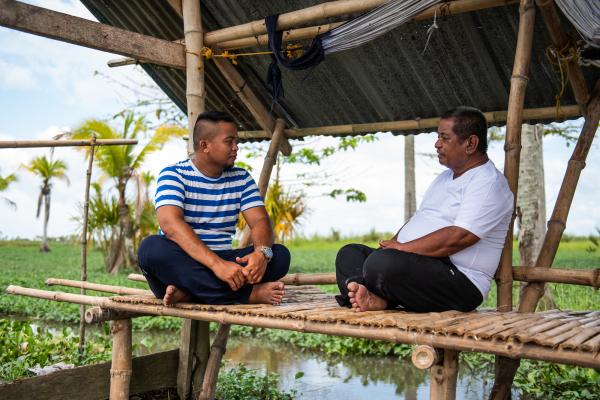
Our purpose is to create lasting change through volunteering. At VSO we do development differently. We harness the skills and expertise of volunteers to deliver long lasting change.
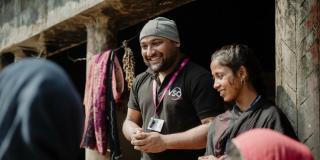
We put people first and empower them to be in the driving seat of their own development. Our volunteers work in collaboration with marginalised communities in every aspect of project design, delivery and evaluation, enabling the world's poorest communities to take charge of their own change.
Strategy
Our ambition is to bring lasting and positive change in the lives of the people we work with, focusing on the marginalised and vulnerable. We make a significant contribution towards achieving the Sustainable Development Goals (SDGs) by using the transformational power of volunteering.
How we work
At VSO, we know that people in developing countries have the power, courage and desire to help themselves. That’s why we use our volunteering for development approach that puts the most marginalised people first, to build a more equitable society. Our volunteers work with communities to strengthen education, livelihoods and health systems, tackling vulnerability and marginalisation.
About our unique Volunteering for Development approach
Partner with VSO
Partnerships at VSO are more than just alliances; they're shared missions with resounding impact. We team up with diverse partners and communities to co-create lasting change. Our solutions are effective because they are locally owned and sustained.
Areas of work
Inclusive education
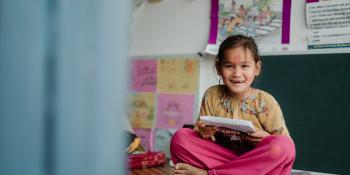
Making sure everyone gets the skills they need to live a fulfilled, dignified life.
We helped almost 3.6 million people to access the quality education they deserve using our current strategy.
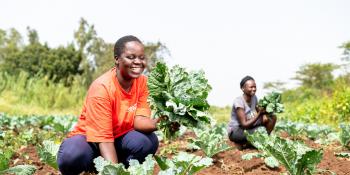
Resilient livelihoods
Ensuring people have the skills needed to support themselves and their families.
Over 400,000 people benefited from our work supporting livelihoods using our current strategy.
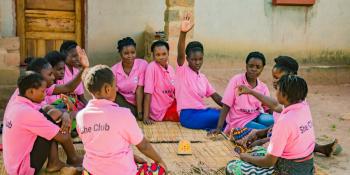
Adolescent and youth health and wellbeing
Improving health services and empowering people to exercise their right to quality care.
We helped almost 200,000 people access better healthcare using our current strategy.
Our impact
Since VSO started in 1958, we have worked in over 90 countries, deployed over 100,000 volunteers and supported over 90 million people. Using our current strategy (2022-28), we’ve reached 24.8 million people in, over 20.6 million indirectly and nearly 4.2 million directly.
Nearly 3.6 million were reached through our education projects.
Over 400,000 people were reached through our resilient livelihoods programme.
Nearly 200,000 people were reached through our health projects.
Our values
Collaboration
- Empower poor and marginalised people to take charge of their own development.
- Share skills and knowledge to create long lasting, sustainable change.
- Build collaborative partnerships that promote innovation, growth and impact.
Inclusion
- Stand beside and advocate for those who have been denied choice and opportunity.
- Promote diversity and equality throughout our work.
- Encourage different, inquisitive perspectives.
Knowledge
- Lead volunteering for development, setting the standard for ourselves and others.
- Use evidence and insight to guide our actions.
- Recruit the right people and work where we have the greatest impact.
Integrity
- Commit to safeguarding and take a zero-tolerance approach to abuse and harm.
- Treat others with respect, as equals.
- Be open, transparent and accountable in everything we do.
Support us with a donation
Our commitment to fairness and transparency
Our work would not be possible without funding and donations from agencies, trusts, private companies and the general public. We value every gift that you give, and will always put it straight to work as quickly as we can. In 2023-24, 85p of every £1 you gave went directly towards tackling poverty worldwide. 15p was spent on the day-to-day running of the charity and raising the next £1 so that we can help even more people this year.